Search engine optimization changed completely in 2026.
Old methods relied on matching words. New methods rely on reasoning, synthesis, and predicting what users want.
Large Language Models (LLMs) and neural matching systems now power search.
The ecosystem has split into two parallel worlds:
- Traditional organic results – The classic “10 blue links.”
- Generative Engine Optimization (GEO) – The rules for AI Overviews and AI‑generated answers.
More than 60% of informational searches now end without a click.
The old ranking factors—keyword density and raw backlink counts—no longer dominate.
What wins today?
Entity‑based authority. Multimodal signal consistency. Implicit user feedback.
This guide covers every confirmed, correlated, and observed ranking factor for 2026.
We synthesized data from over 200 distinct algorithmic signals.
Here is the definitive taxonomy of what really drives global search visibility.
The Paradigm Shift: Generative Engine Optimization and AI Overviews
AI Overviews changed how people get traffic.
They process over 2 billion monthly active users. They appear in nearly 48% of all searches.
These generative summaries answer questions directly on the results page. Users get what they want before clicking anything.
The underlying AI models include:
- PaLM2 – For natural language generation
- Gemini – For multimodal understanding
- A modified MUM – For complex query parsing
These models evaluate content with their own ranking criteria.
These criteria run parallel to the traditional organic index. They are independent.
Here is the proof:
Only 38% of pages cited in AI Overviews also rank in the top ten traditional results for the same query.
To win in a generative world, you need a separate optimization method.
Focus on:
- Content extractability – Can AI pull your facts easily?
- Entity authority – Does the world recognize your brand as an expert?
- Citation frequency – How often do AI models mention you?
Share of Model and Brand Entity Signals
In a zero‑click world, traditional traffic metrics no longer show total visibility.
The industry now uses Share of Model as the main performance indicator.
What is Share of Model?
It measures how often an AI model cites your entity within a specific topic area.
Think of it as market share, but for generative answers.
What factors matter most for AI inclusion?
Off‑site entity validation and brand ubiquity. They rank above traditional on‑site metrics.
Generative Engine Visibility Factor Correlations
| Factor | Correlation | What It Means |
|---|---|---|
| Branded Web Mentions | 0.664 | Unlinked brand mentions across the web train language models. They build semantic authority. |
| Branded Anchor Text | 0.527 | Linked mentions with your brand name reinforce entity identity. They matter more than generic anchors. |
| Branded Search Volume | 0.392 | High branded search volume shows external demand. AI models see this as a trust signal. |
| Domain Rating | 0.326 | Old domain authority still helps, but less than before. Models prefer entity mentions over link equity. |
| Total Backlink Volume | 0.218 | Raw backlink counts have weak correlation with AI citations. Quality and context matter more now. |
| Total Site Pages | 0.170 | Domain size is the weakest predictor. AI prizes deep coverage of a topic, not many shallow pages. |
The data shows a “visibility cliff.”
Brands in the top 25% of global web mentions receive up to ten times more AI citations than lower‑quartile brands.
Why?
Language models synthesize answers based on mathematical consensus and entity prevalence in training data.
Small advantages in brand awareness create exponential gains in AI visibility.
How to capitalize?
Structure your content for extraction:
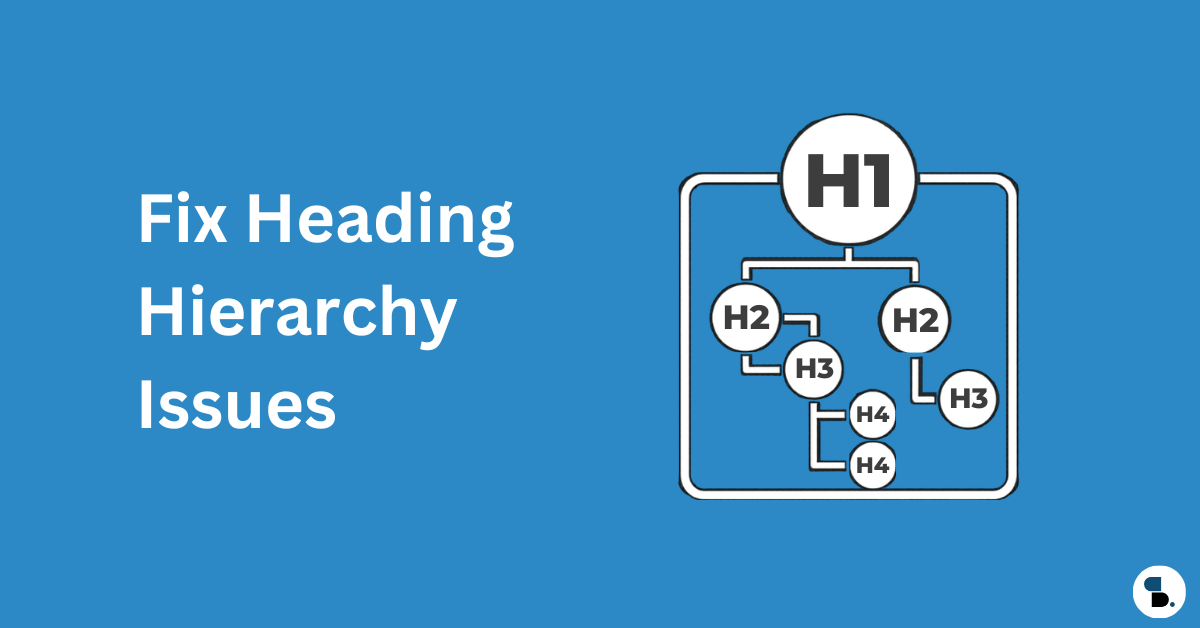
- Clear heading hierarchies
- Concise paragraph structures
- Targeted information gain that makes machine parsing easy
The Architecture of Content Quality and E-E-A-T 2.0
Content quality remains the most heavily weighted element in traditional organic ranking.
It accounts for about 23% of the ranking hierarchy.
Niche topical expertise follows at 13%.
But “quality” has changed.
It is no longer about keyword density.
Now it means semantic depth, information gain, and the E‑E‑A‑T 2.0 framework.
The Pillars of E‑E‑A‑T 2.0
Google added “Experience” to the quality rater guidelines.
This change directly targets purely synthesized AI content.
Generative models lack lived experience.
Domains using real human authors gain a clear advantage.
Here are the four pillars:
1. Experience
Does your content show lived encounters?
Does it document real processes?
Does it include original visual evidence?
Anonymous general summaries are devalued.
What works: first‑person narratives, original data sets, custom images, detailed case studies.
These prove you actually interacted with the subject.
2. Expertise
Measured by semantic depth.
Also measured by accuracy of entity relationships and topical clusters.
The pillar‑cluster model works best: one central page linking to detailed sub‑topics.
This shows you own the entire subject.
3. Authoritativeness
This is granted externally, not claimed.
Calculated through high‑quality contextual backlinks, digital PR mentions, and inclusion in expert lists.
4. Trustworthiness
This is the foundation layer.
Determined by technical security, accurate business info, transparent author bylines with verifiable credentials, and stable user experience.
If your domain lacks HTTPS or clear editorial standards, you fail the trust threshold.
Your expertise and experience become algorithmically worthless.
Page-Level Semantic and Structural Factors
At the granular level, the algorithm assesses each HTML document using these refined factors.
| Factor | How It Works in 2026 |
|---|---|
| Keyword in Title Tag | Still a primary relevance signal. Keywords near the beginning help slightly. Natural phrasing beats exact‑match stuffing. |
| Keyword in Meta Description | Not a direct ranking factor. But persuasive, keyword‑rich descriptions increase CTR. That feeds behavioral ranking models. |
| Keyword in H1 Tag | The definitive structural signal of your page’s main topic. Missing or duplicate H1s hurt entity extraction. |
| Keyword Frequency / TF-IDF | Term Frequency‑Inverse Document Frequency calculates term occurrence compared to normal content. Balanced frequency shows relevance. Too much triggers over‑optimization penalties. |
| Content Length & Depth | Long‑form content historically ranks higher because it covers more long‑tail variants. Length must match actual information gain. |
| Table of Contents | Anchor‑linked TOCs improve UX for long pages. They give crawlers parseable jump‑links. Often leads to expanded sitelinks in SERPs. |
| Latent Semantic Indexing (LSI) | Related terms and synonyms prove topical depth. Neural matching uses them to understand context beyond exact phrases. |
| Entity Match | How well the algorithm maps your page’s subject to the Global Knowledge Graph. Precise matching decides if you become a source for Generative AI. |
| Content Recency & Updates | A time multiplier applies to queries needing fresh data. Major structural updates signal relevance. Superficial tweaks are ignored. |
| Grammar & Reading Level | Poor grammar correlates with low E‑E‑A‑T scores. Matching reading level to search intent improves engagement and dwell time. |
| Multimedia Integration | Optimized video, audio, and interactive visuals increase interaction depth and time‑on‑page. This sends positive behavioral signals. |
| Internal Linking Structure | The number, quality, and anchor text of internal links move PageRank through your site. They establish a hierarchy of important pages. |
Behavioral Signals, Navboost, and the Implicit Feedback Loop
For years, experts debated whether user clicks affect rankings.
In 2026, the debate is over.
User interaction metrics are now “raw signals” that drive deep‑learning ranking modifiers.
Models like Navboost, RankEmbed, and RankEmbedBERT rely on implicit user feedback.
They use this feedback to adjust ranking baselines and refine generative matching.
The Mechanics of Click Fractions and Task Completion
The algorithm does not reward raw click volume.
It filters clicks for noise.
Then it calculates the ratio of successful interactions to total interactions.
The key difference is between a Long Click and a Short Click.
- Long Click – A user clicks a result and stays on the content. They do not immediately return to the search results.
- Short Click – A user clicks and quickly bounces back.
The algorithm evaluates the Long Click‑to‑Click (LCIC) fraction:
text
LCIC = Long Clicks ÷ Total Clicks
A high LCIC fraction means user intent was satisfied.
This data is aggregated over about 70 days of search logs.
That is why ranking changes happen as slow, sustained shifts—not daily fluctuations.
Statistical smoothing prevents one odd click from skewing the results.
Beyond click duration, algorithms also evaluate:
- Scroll depth
- Navigational interactions
- Task completion
Example of task completion:
A user searches, clicks a result, and completes a purchase without issuing another search.
That heavily reinforces the page’s position.
With Google Analytics 4 (GA4), predictive SEO models can forecast search behavior changes.
They use historical event data, seasonal demand patterns, and cross‑channel interactions.
Pages that consistently generate high‑intent conversions and low bounce rates build algorithmic resilience.
They become protected from broad volatility.
Technical Infrastructure, Core Web Vitals, and Crawlability
Technical SEO is the absolute prerequisite for indexing and ranking.
No amount of brilliant content can overcome an architecture that bots cannot crawl, parse, or render.
In 2026, performance is governed by the Core Web Vitals framework.
It uses real‑world data from the Chrome User Experience Report (CrUX).
The Evolution of Core Web Vitals
Passing Core Web Vitals does not trigger a manual penalty.
But passing them is a critical tie‑breaker in competitive environments.
It also heavily influences the behavioral signals that drive Navboost scores.
The biggest change: First Input Delay (FID) was replaced by Interaction to Next Paint (INP).
What INP measures:
INP captures the latency of every click, tap, and keyboard input across the entire page visit lifecycle.
- Good – INP ≤ 200 milliseconds
- Needs improvement – 200–500 milliseconds
- Poor – INP > 500 milliseconds (severely degraded experience)
Largest Contentful Paint (LCP) – Measures render time of the largest visible element in the viewport.
Threshold: LCP of 2.5 seconds or faster.
Cumulative Layout Shift (CLS) – Quantifies visual stability. Penalizes unexpected element shifts during loading.
Compliant score: below 0.1.
Domain and Site‑Level Technical Constraints
| Factor | How It Works in 2026 |
|---|---|
| Site Architecture | A flat, logical structure helps crawlers reach deep pages efficiently. Complex structures bury content and waste crawl budget. |
| SSL Certificate (HTTPS) | Secure connections are mandatory. Non‑secure HTTP sites face ranking suppression and browser warnings. |
| Server Location & Uptime | Frequent downtime reduces crawl rate. Servers physically close to searchers improve localized search latency. |
| XML Sitemaps | Accurate, dynamic sitemaps ensure rapid discovery of new URLs, hreflang variants, and multimedia assets. |
| Duplicate Meta Information | Redundant titles and descriptions confuse clustering systems. This leads to cannibalization (engine cannot pick a canonical version). |
| Mobile Optimization | Mobile‑first indexing is universal. Strict parity between desktop and mobile is required. Content hidden behind accordions may be weighted less. |
| Schema Markup | Structured data (Article, Person, LocalBusiness, FAQ) turns unstructured text into machine‑readable format. This enables rich snippets and AI inclusion. |
The Backlink Graph and Off‑Page Trust Mechanisms
Even with generative AI rising, the backlink graph remains the main mathematical way to measure third‑party trust.
But the evaluation has shifted.
It is now about quality, contextual relevance, and network diversity—not quantity.
Thousands of low‑tier directory links or forum spam no longer help.
Advanced pattern recognition systems actively reduce a site’s TrustRank when they detect such patterns.
Link Quality and Contextual Relevance
One backlink from a highly authoritative, globally recognized domain outweighs hundreds from obscure sources.
The algorithm also checks thematic relevance:
- A link from a closely related niche provides concentrated semantic value.
- An off‑topic link gives almost no equity.
Link placement matters:
Contextual links inside editorial body text carry much more weight than links in footers, sidebars, or author bios.
The system also evaluates co‑occurrences—the text surrounding the backlink.
It extracts contextual relevance even when the anchor text itself is generic.
| Backlink Factor | How It Works in 2026 |
|---|---|
| Linking Root Domains & IPs | Many links from diverse root domains and different C‑Class IPs prove organic authority. Links from the same IP block trigger PBN filters. |
| Backlink Anchor Text | Anchor text gives explicit context. But repetitive exact‑match profiles get flagged as manipulation. A natural profile uses branded, navigational, and phrase‑match anchors. |
| .EDU & .GOV Domains | These domains have massive TrustRank due to strict registration. Backlinks from them are highly coveted validation signals. |
| Link Velocity | Steady, natural positive link velocity signals ongoing relevance. Sudden spikes of low‑quality links trigger demotions or manual reviews. |
| Link Diversity | A healthy profile contains a realistic mix of “dofollow,” “nofollow,” “sponsored,” and “UGC” attributes. This simulates natural web growth. |
| Curated Lists & Wikipedia | Being cited as a verified source on Wikipedia or in expert roundups gives huge TrustRank. It acts as powerful entity verification. |
| Bad Neighborhoods | Links from malware hosts, link farms, or penalized domains pass negative equity. Audit your backlinks and use the Disavow tool to cut toxic ties. |
Multimodal Search: Visual, Voice, and the Vibe Signal
The 2026 search ecosystem is not limited to text.
Multimodal interfaces require optimization for visual, auditory, and contextual dimensions.
A text‑only strategy captures only a fraction of user intent.
Visual Search and Image Optimization
Visual queries (driven by Google Lens) account for over 22% of all web searches.
Annual growth exceeds 30%.
Algorithms rely on interconnected metadata layers, embedded file data, and advanced image recognition neural networks.
Format – AVIF is heavily favored. It creates files up to 50% smaller than equivalent JPEGs. WebP is the secondary fallback.
Resolution – Minimum 1200 pixels on the longest edge. This qualifies your images for advanced indexing in Google Discover and Lens results.
Contextual triangulation determines ranking.
The search engine correlates:
- Descriptive Alt Text
- Embedded EXIF data
- Logical file naming
- Surrounding on‑page text
When these align with Product or ImageObject Schema markup, your image becomes an authoritative, searchable entity.
Voice Search and Answer Engine Optimization
27% of the global mobile population actively uses voice search.
To rank for voice, you need distinct Answer Engine Optimization methods.
Speed – Voice answer pages load in 2.68 seconds on average. That is 52% faster than standard pages. Failing speed thresholds disqualifies you—regardless of content quality.
Structure – Algorithms favor content that captures “Position 0” featured snippets.
Give direct, concise answers to long‑tail, conversational questions within the first 40 words. This captures the highest share of voice citations.
Local intent – 58% of voice searches have specific local intent.
Maintain granular NAP (Name, Address, Phone) schema. Keep consistent directory listings. Keep an optimized Google Business Profile. These are non‑negotiable.
The Vibe Factor and Cross‑Platform Signal Continuity
A new and powerful ranking dynamic is the “Vibe” factor.
This is a multimodal signal. It assesses the emotional, contextual, and aesthetic tone of your entity’s content across the entire internet.
Algorithms parse:
- Audio clarity
- Visual composition
- Cross‑platform behavioral patterns
They group content into overarching thematic profiles.
Search dominance requires a unified signal ecosystem.
When your brand maintains a consistent “vibe”—the same authoritative tone, visual aesthetic, and spoken themes across YouTube Shorts, Instagram Reels, and your website video—you trigger cross‑platform algorithmic trust.
If the algorithm recognizes a user engaging with a specific visual pattern on a social platform, it becomes much more likely to suggest that brand in traditional search or generative environments.
Algorithmic Enforcement: SpamBrain and Policy Penalties
Throughout 2026, algorithmic updates show an aggressive, AI‑driven stance against manipulation.
The March 2026 Core and Spam Updates used enhanced SpamBrain detection protocols.
They neutralized synthetic SEO tactics globally.
They executed rollouts with unprecedented speed.
These are enforcement‑based updates.
They permanently strip away advantages gained through policy violations.
Important: Simply disavowing bad links or deleting offending pages will not restore your original rankings.
The artificial foundation has been removed.
Targeted Abuses and Algorithmic Demotions
Scaled Content Abuse
Targets domains mass‑producing low‑value, unoriginal pages.
The penalty looks for:
- No human editorial oversight
- No original reporting
- Poor information gain
- Automation used to create shallow content that does not satisfy intent
Site Reputation Abuse (Parasite SEO)
Happens when a high‑authority domain publishes completely unrelated third‑party content just to pass ranking signals.
The 2026 policy ignores claims of “first‑party involvement” if the content is disconnected from the host domain’s main semantic entity.
Expired Domain Abuse
The algorithm identifies and devalues expired domains purchased to repurpose old backlink profiles for unrelated, low‑quality niches.
Manipulative Link Patterns & Cloaking
Automated link farms, sneaky redirects, and cloaking result in severe, often permanent demotions.
Recovery requires months of sustained, compliant behavioral data.
International SEO and Entity Geolocation
Global expansion in 2026 requires precision far beyond language translation.
Multilingual SEO is governed by highly sensitive cross‑language information retrieval systems.
The foundational requirement: flawless hreflang implementation.
This ensures the algorithm serves the correct localized URL based on regional IP and browser language settings.
But technical hygiene alone is not enough.
Algorithms now differentiate between literal translation and genuine cultural localization.
Your pages must:
- Adapt to localized search volume trends
- Incorporate cultural idioms
- Address region‑specific intent
AI‑generated translations without human oversight produce “translation‑only localization.”
The 2026 algorithm penalizes these as thin content if they lack:
- Specific regional entity signals
- Authentic local backlinks
- Accurate regional schema markup
Technical tip:
Deploy a Content Delivery Network (CDN) or localized server hosting.
This keeps your Core Web Vitals thresholds maintained globally.
It prevents high latency from degrading international behavioral ranking signals.
Domain‑Level Constraints and Special Algorithm Rules
Before evaluating page semantics, the algorithm checks your root domain’s overall health, history, and structural integrity.
| Domain Factor | How It Works in 2026 |
|---|---|
| Domain Age & History | Older domains have accumulated historical interaction data and entity stability. New domains face a provisional “sandbox” filtering period. Erratic ownership or past manual penalties trigger heightened scrutiny. |
| Domain Registration Length | Domains registered for multiple consecutive years signal long‑term commitment. This separates you from churn‑and‑burn spam tactics. |
| Keyword in TLD | A core keyword in the domain name gives a minor lexical relevance signal. But its weight has been reduced. Low‑quality Exact Match Domains no longer rank purely on name. |
| Country‑Specific TLD | A localized extension (.ca, .co.uk) strongly boosts local visibility. But it limits your ability to rank globally outside that region. |
Special Conditional Algorithms
Your Money or Your Life (YMYL)
Queries about finance, medical health, legal advice, and safety face much stricter E‑E‑A‑T evaluations.
Unverified authors are systematically blocked from ranking for these topics.
Query Deserves Freshness (QDF)
A temporary but large visibility multiplier is applied to trending news or sudden search volume spikes.
Older authoritative pages get bypassed in favor of very current content.
DMCA Penalties
Domains with multiple valid copyright takedown requests are systematically suppressed in rankings.
Social Signals and Entity Velocity
By 2026, the relationship between social media and ranking is clearly defined.
Social signals (likes, shares, retweets, follower counts) are strictly indirect ranking factors.
A high follower count does not directly boost authority.
However, the ripple effect of social velocity is a critical organic catalyst.
Here is how it works:
- High‑engagement content on LinkedIn, X (Twitter), and Reddit accelerates crawler discovery. This ensures rapid indexing.
- Viral social distribution drastically reduces the “time‑to‑first‑backlink.” Widely shared content reaches journalists and creators. They then link to it from their own domains. Those editorial backlinks directly and powerfully influence rankings.
Heavy social promotion also drives branded search volume.
Users search for a brand name after encountering it socially.
Machine learning systems then map that brand to its core topical cluster in the Knowledge Graph.
This behavior signals high external demand and entity trust.
It provides a substantial algorithmic lift to all associated non‑branded queries.
Conclusion: The Three Pillars of 2026 Visibility
The 2026 search algorithm is not a static checklist.
It is a dynamic, neural‑network‑driven ecosystem.
It evaluates intent, trust, and behavior in real time.
To achieve dominant visibility, you must execute three intersecting disciplines simultaneously.
Pillar 1: Absolute Technical Perfection
- Domains must parse efficiently.
- Pass strict Core Web Vitals thresholds (INP below 200 milliseconds).
- Use comprehensive Schema markup to provide machine‑readable context.
Pillar 2: Human E‑E‑A‑T Content
- Move beyond keyword matching.
- Overtly demonstrate experience.
- Deliver explicit information gain through lived experience, proprietary data, and deep semantic clustering.
- Serve a dual purpose:
- An immersive document that drives deep behavioral engagement (high Long Click fractions) for traditional SERPs.
- A highly structured, easily extractable resource for Generative Engine LLMs.
Pillar 3: Brand Entity Building
This has completely replaced isolated link building.
- Cultivate a widespread digital footprint of unlinked brand mentions.
- Earn high‑quality contextual backlinks.
- Maintain consistent multimodal “vibe” signals across all platforms.
When you do all three, you create an insurmountable algorithmic moat.
Final Takeaway
In an era where AI Overviews satisfy immediate informational intent without a click,
optimizing to become the verified, trusted entity behind the AI’s synthesized response
is the definitive ranking factor of the modern web.