


















Search has changed. In 2026, you rank when AI cites you, algorithms trust you, and humans understand you instantly.
This guide covers every modern on‑page factor. From technical foundations to generative engine optimization. After reading it, you won’t need another resource.
We have distilled years of algorithm updates, hundreds of case studies, and 2026 best practices into one definitive guide.
1. The New Reality: Why On‑Page SEO Changed Forever
Search engine optimization is no longer about ten blue links.
We now live in a multi‑modal discovery world. Large Language Models (LLMs) are the gatekeepers of information.
Google’s AI Mode, AI Overviews, Perplexity, and ChatGPT Search do not just crawl pages. They synthesize, interpret, and extract answers from trusted sources.
This shift has created “zero‑click” searches. About 60% of queries now end without a click.
AI Overviews alone caused a 61% drop in organic click‑through rates for standard results.
The traditional #1 position is seeing a 32% year‑over‑year decline.
But this is not a disaster.
When your content is cited inside an AI Overview, you get a 35% increase in clicks compared to high‑ranking pages that are ignored.
Also, being the source an AI trusts builds brand awareness during the research phase. That leads to higher‑quality traffic and better conversion rates.
Your job for 2026 is clear. Engineer every page for two audiences at the same time:
- Human readers need an engaging, authoritative experience.
- Machines need a structured, semantic, easily extractable architecture.
This guide shows you how to do both. You will leave behind isolated keyword targeting. You will adopt Generative Engine Optimization (GEO), Answer Engine Optimization (AEO), and unwavering topical authority.
2. How We Got Here: The Algorithm Timeline (2023–2026)
To understand what works now, look at the pattern.
Google moved from two core updates per year to a near‑continuous recalibration every three months.
2023 – The April Reviews Update gave huge weight to first‑hand experience. The era of “content written by an expert” began.
2024 – AI‑generated summaries (powered by Gemini) changed user behavior. Traditional SERP features started shrinking.
Late 2025 – A volatile transition. Google improved its ability to detect AI‑generated fluff.
March 2026 – The decisive moment. A coordinated spam update and core update hit at the same time. They permanently reshaped the ranking landscape.
The takeaway? Algorithms no longer look at single variables.
They holistically assess expertise, originality, and structural integrity.
If you still try to trick the system with bulk AI content, outdated technical tricks, or thin pages, you will not recover.
This guide is built on one principle: align with what Google rewards today—genuine expertise, real experience, and a multi‑platform brand presence.
3. The March 2026 Earthquake: Spam Update + Core Update
Everything you need to know about modern on‑page SEO starts here.
In early 2026, Google launched a “one‑two punch”:
- A record‑fast spam update
- Immediately followed by a broad core update
This was intentional. Google purged manipulative content first. Then it reset quality thresholds for everyone else.
The Spam Update (March 24 – April 5, 2026)
Google’s most aggressive enforcement yet targeted three abuses with surgical precision.
- Scaled AI content abuse – Domains publishing high volumes of generic, unedited AI content (without editorial oversight) lost 60–80% of their traffic.
- Expired domain manipulation – Sites built on repurposed old domains (bought only for link equity) were demoted.
- Site reputation abuse (Parasite SEO) – Low‑quality, third‑party content hosted on authoritative domains was systematically filtered out.
The message: volume without value is dead.
The Core Update (March 27, 2026, onward)
This update fundamentally changed how signals are weighted. The headline changes:
- E‑E‑A‑T became universal. No longer limited to YMYL (Your Money or Your Life) topics. Now every single page is evaluated on Experience, Expertise, Authoritativeness, and Trustworthiness.
- Affiliate sites were decimated. 71% saw severe drops. Google prioritized first‑hand experience over aggregated summaries.
- Core Web Vitals became a composite score. Loading speed, interactivity, and visual stability are now aggregated into one performance factor that directly influences rankings.
The new baseline: flawless technical performance is only the entry ticket.
What actually gets you into AI Overviews and top organic spots is demonstrated first‑hand experience and deep topical authority.
4. The Structural Foundations of On‑Page SEO
Before you write a single word, get the scaffolding right.
In 2026, HTML structure and metadata are the primary parsing layer for both traditional crawlers and LLM ingestion.
Intent Alignment: The Algorithm’s First Filter
Search engines rank solutions, not words.
If your page’s format, tone, and depth do not match what the user actually wants, no amount of keyword tweaking will save you.
Every query falls into one of four buckets:
| Intent | Primary Goal | Optimal Content Architecture |
|---|---|---|
| Informational | Deep knowledge, problem‑solving | Long‑form guides, modular FAQ sections, entity‑rich tutorials built for AI extraction |
| Navigational | Find a specific brand or location | Streamlined homepage, hyper‑local landing pages, clear brand entity declarations |
| Commercial | Compare options, read reviews | Side‑by‑side tables, hands‑on reviews with original media, pros/cons matrices |
| Transactional | Purchase, download, sign up | Frictionless product pages, optimized checkout flows, prominent CTAs, rich product schema |
Always reverse‑engineer what is already ranking.
The top results and AI Overviews for your target query reveal the algorithmic expectation.
Then, answer the primary query directly in the first two to three sentences before expanding into deeper subtopics.
URL Optimization: Terse, Descriptive, Semantic
URLs are still lightweight ranking signals and trust cues. Best practices:
- Remove stop words (“and,” “the,” “of”)
- Keep the structure flat (no more than three logical levels deep)
- Include the primary keyword naturally
- Eliminate parameter‑based duplicate URLs (parameter waste eats over 30% of crawl budget on large sites; use canonicalization)
Title Tags and Meta Descriptions: Your Organic Ad Copy
Title tag – Put the primary concept at the front. Keep it under 60 characters. Include a compelling unique value proposition. This is still the strongest direct relevance signal.
Meta description – Not a ranking factor, but it is your free ad. Keep it between 105–160 characters. Incorporate secondary keywords naturally (they may be bolded in SERPs). Always include a clear call‑to‑action. AI search platforms increasingly use click data to validate relevance. A high CTR directly supports your visibility.
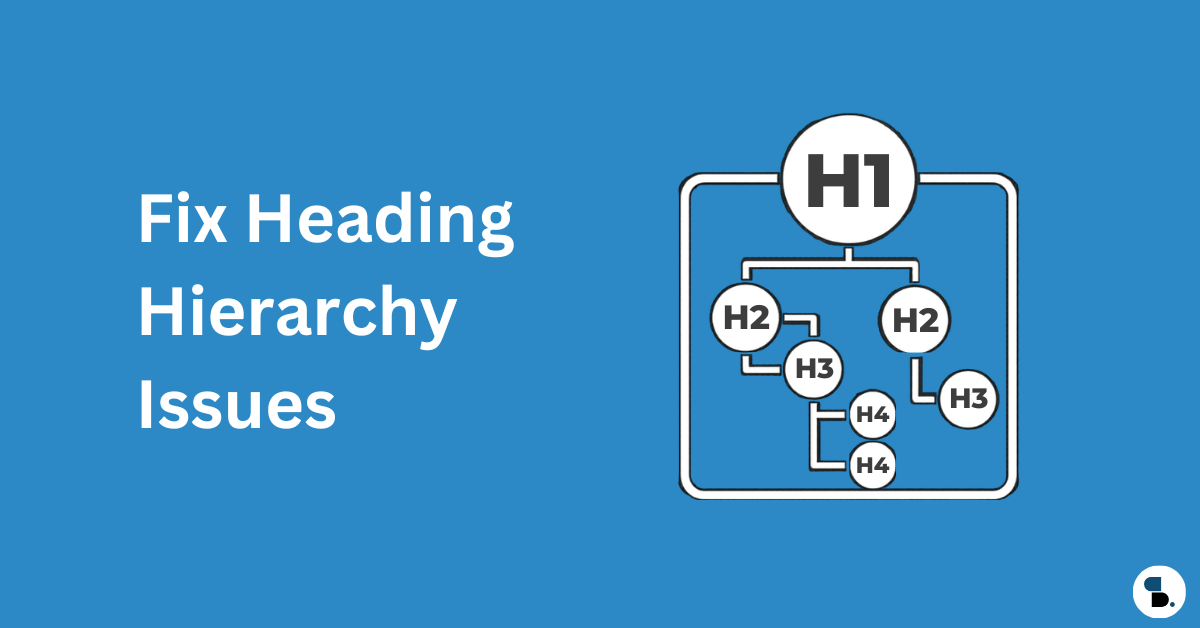
Heading Hierarchy: A Blueprint for LLMs
Your H1–H6 structure is not just formatting. It is the semantic map that LLMs use to extract answers.
- The H1 should closely mirror the title tag and define the page’s singular topic.
- Subheadings must be descriptive and match natural language queries. Avoid generic labels like “Introduction” or “Step 1.”
- Use question‑based headers, for example: “How to Optimize Core Web Vitals for Shopify Stores.” This helps AI models map queries to specific sections.
5. E‑E‑A‑T: The Architecture of Trust
The algorithm now treats Experience, Expertise, Authoritativeness, and Trustworthiness as a single, non‑negotiable filter.
Trust is the foundation. Without it, all other signals are discounted.
Here is how to prove you are the real deal.
The “Experience” Signal: Show, Don’t Tell
The first “E” now carries extra weight. Google’s quality raters look for clear evidence that you have actually done the thing you are talking about.
This means:
- Original media – Proprietary photos, unedited video demonstrations, custom data visualizations
- Specific anecdotes and documented failures – Insights an LLM cannot hallucinate
- Original research, case studies, proprietary data – These make you a primary source, which increases the chance of AI citation
Prioritization matrix: focus on high‑traffic, high‑opportunity pages. Inject real‑world data and expert perspective. Never fake experience signals. AI models easily spot semantic inconsistencies.
Author Entities: From Optional to Mandatory
Anonymity kills rankings. Every piece of content must be tied to a verifiable human expert.
Build dedicated author pages with:
- Full legal name and professional headshot
- Credentials, academic background, and industry affiliations
- An index of all their articles on your domain
Then, corroborate that identity externally. Link the author’s on‑site bio to their LinkedIn, industry association profiles, and bylined articles on other authoritative sites.
When search engines can cross‑reference an author’s footprint across multiple trusted nodes, the content inherits a large baseline trust score.
6. Linguistic Optimization: The Mathematics of Machine‑Friendly Content
LLMs assess readability, semantic density, and clarity.
If your content is a wall of jargon‑heavy, convoluted text, it introduces friction and will not be cited.
Readability Formulas That Matter
Use these metrics before publishing to ensure you stay within optimal extraction thresholds:
- Flesch Reading Ease – Higher is easier. Aim for 60+ for general audiences. Aim for 50+ for technical B2B.
- Flesch‑Kincaid Grade Level & ARI – Target 8th–10th grade for broad content. Target 12th+ for specialized topics (but never above 14 unless absolutely necessary).
- Gunning Fog Index – Penalizes polysyllabic words. Keep it below 12 for technical content. Keep it below 10 for mass appeal.
Sentence Length and Comprehension
Data from 2026 analysis shows a sharp correlation:
| Average Sentence Length | Comprehension |
|---|---|
| Up to 8 words | 100% |
| 11 words | 90% |
| 17 words | 75% |
| 21 words | 40% |
| 25+ words | 24% or less |
Best practices:
- Use short paragraphs (max 2–3 lines)
- Use a conversational tone
- Use zero keyword stuffing
Clean, accessible language allows LLMs to extract facts with high confidence.
7. Generative Engine Optimization (GEO): Engineering for AI Extraction
AI search engines do not render full pages. They pull modular chunks.
Your content must be structured for immediate ingestion.
Semantic Chunking and “Lead with the Answer”
Divide long‑form content into distinct sections. Each section should be headed by an H2 or H3 that asks a specific user question.
Then, the first sentence immediately after the heading must give a direct, definitive answer in 40–60 words. After that, expand with context, examples, and details.
This inverted pyramid structure does two things:
- It satisfies the LLM’s need for instant extraction.
- It rewards human scanners with depth.
Formatting for Machines
- Use quotable sentences – complete, fact‑rich statements that an AI can lift verbatim.
- Use lists (ordered and unordered) for steps, rankings, and features. But do not turn entire articles into bullet points.
- Techniques that once captured Featured Snippets now apply directly to AI Overviews. Place concise definitions and data near the top of each section.
Crucially, do not rely on JavaScript for content delivery. Many LLM crawlers (GPTBot, ClaudeBot, PerplexityBot) cannot execute complex client‑side scripts. Critical content must be present in the raw HTML DOM on the initial request.
8. Topical Authority: The Hub‑and‑Spoke Model
Isolated pages no longer rank well. Google evaluates your entire site’s coverage of a subject.
To dominate, you need interconnected content clusters.
Implementing Content Clusters
- Pillar Page (the Hub) – A comprehensive, broad overview of the core topic. Targets competitive, broad‑match keywords.
- Cluster Pages (the Spokes) – Deeply specific articles on narrow subtopics, long‑tail queries, and related FAQs.
Internal Linking: The Contextual Bridge
- Pillar page links out to every cluster page.
- Every cluster page links back to the pillar with descriptive, keyword‑rich anchor text.
- Cluster pages cross‑link when semantically relevant.
This structure does more than pass PageRank. It defines the semantic boundaries of your expertise for machine learning algorithms.
Well‑interlinked clusters drive 30% more organic traffic and retain rankings 2.5× longer than isolated posts.
Aim for 2–5 contextual links per 1,000 words.
Crawl Efficiency and the 3‑Click Rule
Every important page must be reachable within three clicks from the homepage.
Flattening your architecture improves crawl efficiency by 40–70%. Pages deeper than four levels rarely rank.
Also, aggressively prune (or noindex) thin, outdated content. This improves your site’s overall quality density. Deleting dead weight lifts the algorithmic evaluation of your remaining pages.
9. Technical On‑Page SEO: Core Web Vitals and INP Mastery
Technical excellence is the floor.
The March 2026 update made Core Web Vitals a composite score. The most critical metric now is Interaction to Next Paint (INP).
What INP Measures
INP replaced First Input Delay (FID).
It observes the latency of all user interactions—clicks, taps, keyboard inputs—throughout the entire page lifecycle. It reports the worst value.
A “Good” rating requires feedback within 200ms at the 75th percentile across all loads.
Scores between 200–500ms need improvement.
Scores above 500ms are poor and directly suppress rankings.
How to Optimize INP
- Break up long tasks – Split large JavaScript bundles. Defer non‑essential third‑party scripts (marketing tags, heatmaps) until after first interaction. Offload heavy computations to Web Workers.
- Debounce high‑frequency events – For dynamic inputs, use a 150–300ms debounce to prevent callback storms.
- Reduce DOM size – Bloat forces massive style recalculations. If your DOM has more than 1,400 nodes, refactor deeply nested containers, simplify accordions, and audit UI libraries.
- Provide immediate visual feedback – Show a loading spinner or state change instantly before processing background data. This satisfies the perception of responsiveness.
10. Advanced Schema Markup: Your Entity Graph
Structured data has evolved from rich‑snippet bait into a critical trust and ingestion layer for AI.
The focus in 2026 is on entity disambiguation and intent‑matched schema.
What Schema to Use Now
Generic FAQ and How‑to rich results have been restricted. Only about 31 schema types still trigger enhanced SERP features.
The priority:
- Organization and Person – Establish the publisher and author entity with full details.
- Article + Author – Link every article to the verified Person entity.
- sameAs property – Connect your entity to Wikidata, Crunchbase, LinkedIn, etc. The more trusted external sources that match, the higher your entity confidence score.
- knowsAbout – Inside Organization/Person schema, declare the topics and concepts you specialize in. This is a direct topical authority signal for AI source selection.
GEO‑Specific Schema
- ClaimReview – For fact‑checking or research content. Signals high trustworthiness.
- DefinedTerm – For glossaries and technical definitions. Explicitly maps your text as the authoritative definition.
Always align schema exactly with visible content. Markup that does not match what users see (fake reviews, inflated ratings, incorrect types) is now classified as “misleading” and triggers penalties.
11. Multimodal & Visual Search Optimization
Visual search is exploding. Google Lens processes over 20 billion searches per month, growing 30% annually.
If your images are not optimized for machine vision, you are invisible in this channel.
Building a Visual Moat
Replace generic stock photos with original, high‑quality imagery that algorithms can consistently associate with your brand.
For e‑commerce, lifestyle photos showing complete “looks” drive “see‑snap‑buy” behavior.
Technical Image Optimization
- Resolution & format – Minimum 1200px wide. Use WebP or AVIF (35% smaller than JPEG). File size under 200 KB.
- Object‑centric composition – Clean backgrounds. Use 3–4 angles to aid object recognition from any perspective.
- Metadata alignment – Hyphenated, keyword‑rich filenames (example:
matte-black-espresso-machine.webp). Alt text up to 125 characters, front‑loaded with key attributes. Images with optimized alt text get 12.5× more clicks from visual surfaces. - Placement – Key images must be above the fold, surrounded by relevant text. One‑third of top Lens results come from this premium placement.
- Structured data overlay – Connect product images to live Product schema (price, availability, currency). This allows Lens to overlay shopping data directly on the image.
12. Voice Search Optimization: The Conversational SEO Ecosystem
Voice search is a distinct, high‑intent channel. Voice queries are longer, question‑based, and heavily local.
Market share of assistants matters because they pull from different indexes:
| Assistant | Index Source | Local Data Source | Market Share |
|---|---|---|---|
| Google Assistant | Google Search | Google Business Profile | 36% |
| Siri | Bing | Apple Maps | 28% |
| Alexa | Bing | Yelp | 18% |
| Cortana | Bing | Bing Places | 8% |
| Samsung Bixby | Bing | Google Maps | 6% |
How to Win in Voice
Voice assistants usually read one answer—often pulled from a Featured Snippet or AI Overview. You must secure that spot.
- Target conversational, long‑tail questions. Structure content to answer them sequentially.
- Place a direct, concise answer (2–3 sentences max) immediately after a question‑based heading.
- Use short paragraphs, easy‑to‑dictate lists, and clear language.
Voice + Local SEO: The 76% Factor
“Near me” queries dominate voice. 76% of users who perform a local voice search visit a business within 24 hours.
Key actions:
- Fully optimize your Google Business Profile (for Google Assistant).
- Ensure NAP consistency across the web.
- Populate Q&A sections with spoken‑question answers.
- Respond to all reviews to signal active business engagement.
13. Auditing, Recovery, and Staying Ahead
Ongoing maintenance is non‑negotiable.
A modern on‑page audit must cover technical infrastructure, content quality, E‑E‑A‑T signals, and AI crawl behavior.
Server Log File Analysis
Front‑end crawlers are not enough. Analyze logs to see exactly how Googlebot and AI‑specific bots (GPTBot, ClaudeBot, PerplexityBot) are interacting.
Look for:
- Uncrawled canonical URLs in sitemaps – Often due to weak internal linking. Re‑integrate orphan pages into clusters.
- Which pages are actually being ingested for LLM training – This reveals what the AI considers valuable.
Content Quality Scoring
After an algorithm hit, score every page on five dimensions of Information Gain:
- Original data
- Verified expertise
- First‑hand experience
- Depth of substance
- Topical relevance
Then:
- Strong pages – Enhance with updated data.
- Weak pages – Rewrite with a credentialed expert.
- Overlapping pages – Consolidate to kill cannibalization.
- Dead weight – Prune with a 410 status code.
Core Update Recovery Workflow
Recovery from a March 2026‑style core update takes months. Follow this timeline:
- Weeks 1–2 – Confirm the drop via Search Console. Identify affected pages. Remove dead weight.
- Weeks 2–3 – Consolidate competing pages. Refine internal linking clusters.
- Weeks 3–6 – Enhance surviving content with proprietary insights and verified authors. Fix all Core Web Vitals (especially INP).
Then monitor impression trends for 6–12 weeks.
Impression recovery precedes click recovery. Full restoration usually coincides with the next broad core update, provided you have demonstrated site‑wide commitment to quality.
The Ultimate On‑Page SEO Checklist for 2026
Before publishing any page, run through this final checklist:
- Intent match – Does the architecture match the user’s goal?
- URL – Terse, keyword‑rich, no stop words.
- Title tag – Front‑loaded, under 60 chars, unique value.
- Meta description – 105–160 chars, secondary keywords, call‑to‑action.
- Heading hierarchy – H1 matches title. H2/H3s are question‑based and descriptive.
- Lead with the answer – Direct 40‑60 word answer after every header.
- E‑E‑A‑T signals – Original media, author entity with external corroboration, anecdotes.
- Readability – Flesch 60+, sentence length ≤17 words, Fog Index under 12.
- Semantic chunking – Content organized into extractable modules.
- Internal links – 2–5 contextual links per 1,000 words. All key pages within 3 clicks.
- Core Web Vitals – Composite “Good” across LCP, CLS, INP. INP under 200ms.
- Schema – JSON‑LD with @graph, Organization+Person, sameAs, knowsAbout.
- Images – Original, 1200px+, WebP/AVIF, alt text, above‑fold placement.
- Product schema overlay – Live pricing and availability for visual search.
- Voice readiness – Concise answers to conversational questions. Local listing optimized.
- Log review – Ensure AI bots are crawling key pages. No orphan pages.
This guide is not a theory piece. It is a blueprint.
Every section reflects what is working right now, verified against the latest algorithm behavior.
On‑page SEO in 2026 is a discipline of precision, authenticity, and technical excellence.
If you apply everything here, you will not need another resource. You will have a site that both humans and machines trust, rank, and—most importantly—cite.