



















It’s a familiar story I’ve heard from countless WooCommerce store owners. You’re up late, looking at the dashboard, and the revenue graph is pointing up and to the right. It should feel great. But then you check your bank account, and that familiar frustration hits you. Sales are climbing, but where is the actual cash profit?
You’re not alone in this struggle. Many successful entrepreneurs master the art of selling only to find themselves trapped in a cycle of high revenue and disappointingly low margins. This isn’t a sales problem; it’s a profitability problem. It’s born from the small, hidden costs, imperfect pricing, and operational leaks that quietly drain your bottom line.
This guide is designed to stop those leaks. I’m not going to give you a gimmicky, trademarked “system.” Instead, I’m going to share a practical approach built on years of experience, designed to 转型你的业务 from a revenue-generating machine into a profit-compounding engine. This isn’t about working harder; it’s about making every sale, every click, and every shipment work smarter for you.
首先,找出悄然拖垮你店铺的隐藏成本
Before you can grow your profit, you have to find where it’s disappearing. In e-commerce, several “invisible” costs are often the primary culprits. Getting a firm handle on these is the first step toward taking back control of your profitability.

Think of your revenue as a whole pie. Here’s how it typically gets sliced up before you even get a piece:
- Cost of Goods Sold (COGS) – Roughly 42%: 这是直接成本 你销售的产品。它直接减少你的毛利润,后者是你用来支付所有其他费用的钱。这里的主要杠杆是更好的产品采购和供应商谈判。
- Shipping & Fulfillment – Roughly 15-20%: 每一笔订单都会侵蚀你的净利润。如果管理不善,它可能使你完全失去竞争力。关键是物流优化和与承运商谈判更优惠的费率。
- Marketing & 客户获取 (CAC) – Roughly 20-30%: 花费大量成本获取一个只购买一次的客户是巨大的利润流失。目标是 提高转化率 并专注于客户留存以降低这一比例。
- Payment Processing Fees – Roughly 2-3.5%: 虽然这看起来很小,但这是一个持续的漏洞,对低价值订单的伤害尤其大。战略性地选择支付网关可以产生真正的不同。
- Returns & Refunds – Roughly 8-10%: 这是双重打击。你失去了销售收入,还必须承担退货运输、损坏商品以及处理所有这一切的人工成本。解决方法在于提供准确的产品信息和制定明智的退货政策。
- Platform & Tech Fees – Roughly 3-5%: 这是你的固定开销。过多不必要的插件和订阅很容易使其膨胀。定期审计你的技术栈至关重要。
实用方法:实现真正利润增长的四个关键领域
Profitability isn’t about finding one magic bullet. It’s about strengthening four interconnected parts of your business. When you make a smart change in one area, you’ll see benefits in the others. This creates a powerful cycle of compounding profit.
- 战略定价: 超越简单的加价,根据产品的真实价值、市场地位和客户心理来定价。这是关于从每笔销售中获取最大可能的利润。
- Smart Sourcing & Cost Control: 系统地降低你的销售成本(COGS)和其他核心开支。这为你提供了更多的喘息空间和利润空间来处理每件售出的商品。
- 优化运营: 将物流(如运输、退货和支付)从资金消耗转变为战略优势,甚至可以提升客户忠诚度。
- 数据驱动决策: Using your store’s own data to stop guessing. Making informed choices is what separates the businesses that thrive from those that just survive.
1. 战略定价:你最强大的利润杠杆
Pricing is the fastest way to change your profitability. Set it too low, and you’re leaving cash on the table. Set it too high, and you risk scaring away customers. Here’s how to find that sweet spot.
成本加成定价:你的安全网
这是绝对基准: 成本 + 期望利润 = 价格。 It’s straightforward and ensures you never accidentally lose money. While it doesn’t account for market dynamics, it’s the non-negotiable first step. You must know your numbers to ensure you’re covering all associated costs.
Value-Based Pricing: Tying Price to What It’s Worth to the Customer
This is a more advanced strategy where you price your products based on the perceived value they deliver. If your product solves a significant problem or offers a unique benefit that others don’t, you can command a premium price that is much higher than your cost. The extra margin this generates can be reinvested to enhance that value even further, creating a fantastic upward spiral.
竞争定价:利用市场优势
这涉及根据竞争对手设定价格。但要小心。简单地匹配最低价格是一场无人获胜的逐底竞争。明智的做法是将竞争对手数据作为参考点,但始终以你自己的成本结构和独特价值为锚点。你是否提供更好的服务、更快的运输或更高的质量?相应定价。
Psychological Pricing: Nudging Customers Toward “Buy”
这些微妙的心理暗示使你的价格感觉更吸引人。
- 魅力定价: 以.99结尾的价格(比如49.99美元而不是50美元)之所以经典是有原因的。它可以让价格感觉低很多。
- 诱饵效应: 引入第三个选项,使你的首选方案看起来显而易见。例如,小号15美元,大号25美元,或者中号22美元。中号使大号看起来更划算。
- 锚定: Show a higher original price to make the current price seem like a bargain (“Was $150, Now $99”). This frames the purchase as a smart, money-saving decision.

2. 智能运输:从成本中心到利润助推器
Shipping is no longer just a line item expense; it’s a crucial part of the customer experience and a major lever for profitability. Here’s how to turn it from a burden into a strategic asset.
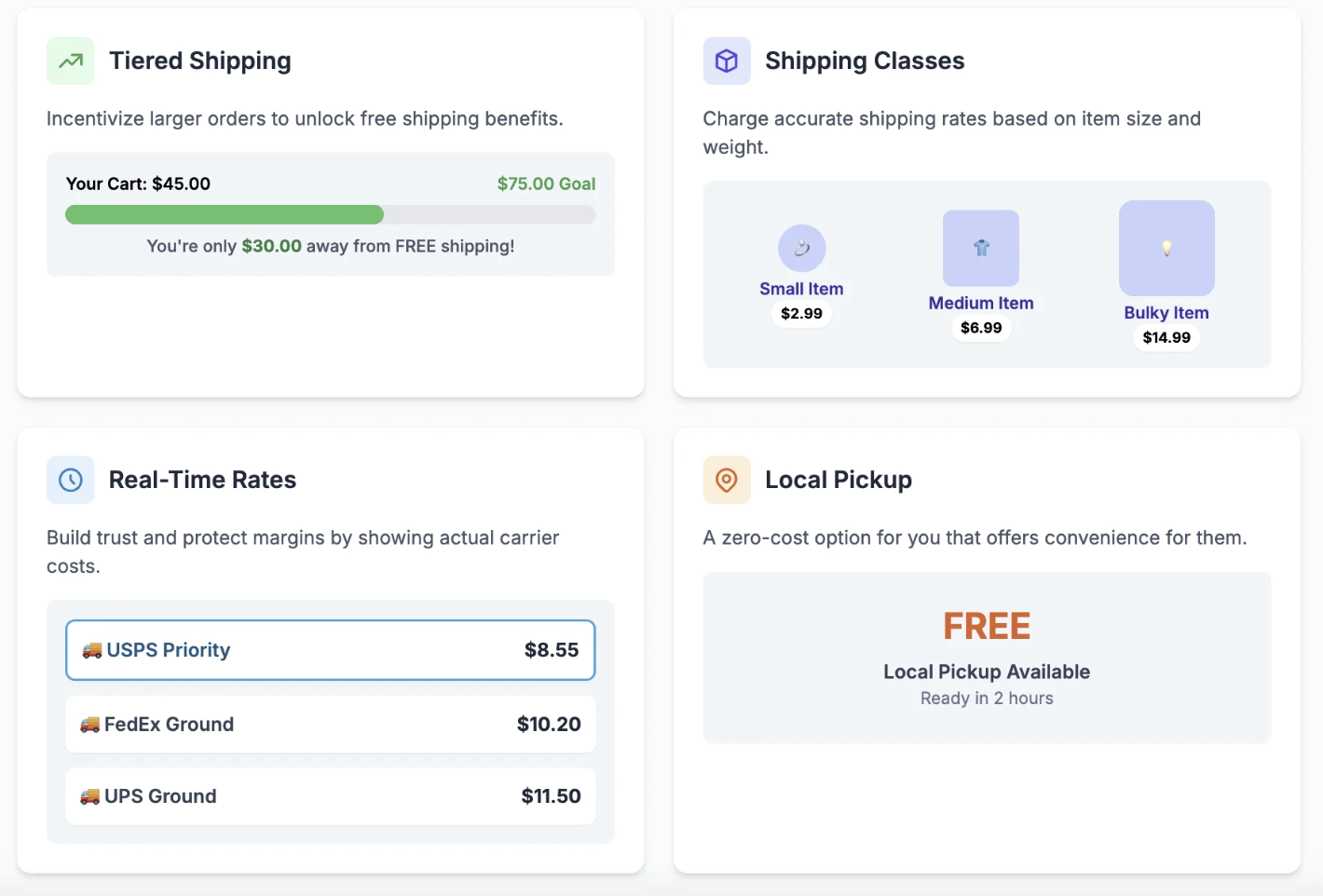
Offer Tiered Shipping, Not Just “Free Shipping”
不要在每个订单上承担100%的运输成本,而是激励客户消费更多。一个非常有效的策略是: “$5 flat rate shipping on orders under $75, but free shipping on orders over $75.” 这一策略直接提高了你的平均订单价值(AOV),将固定成本分摊到更多收入上,并立即提高了每批货物的利润率。
在WooCommerce中使用运输分类
Go into your WooCommerce settings and group products by size or weight (e.g., “Small Items,” “Bulky Items”). This allows you to set more accurate shipping rates instead of overcharging for a keychain or, even worse, losing a significant amount of money shipping a heavy item.
显示实时承运商费率
有些优秀的插件可以直接从承运商(如USPS、FedEx和UPS)获取实时费率。这建立了信任,因为客户看到他们支付的是 实际 成本。更重要的是,它确保你永远不会收费不足而在运输上损失利润。
永远不要低估本地自取
这对你来说是一个零成本的运输选项,对你的本地客户来说是一种极大的便利。当客户来到你的地点时,它还创造了面对面追加销售的自然机会。
3. 智能采购:降低销售成本的直接途径
你的销售成本(COGS)几乎肯定是你最大的单一支出。即使从采购成本中削减几个百分点,也会直接转化为净利润。
代发货与批量采购:一个战略决策
- 代发货: 这种方法风险低,无需承担库存持有成本,非常适合测试新产品。但其代价是利润空间极小,且对客户体验(如品牌或配送时间)的控制非常有限。
- 批量购买(批发): 这需要较高的前期投入,风险也更大,但能带来显著更高的利润率。你可以完全控制产品质量、品牌以及整个客户旅程。
A smart growth path many businesses follow is to start with dropshipping to validate a product idea. Once you’ve proven there is consistent demand, you can confidently transition to buying in bulk to maximize your profit and build a real, lasting brand.
将供应商视为合作伙伴
Your suppliers are your partners in profitability. Don’t treat them like a simple transaction. Build strong, professional relationships. This can lead to better payment terms, preferential pricing, bulk discounts, and even early access to new products. A reliable supplier is just as valuable as a loyal customer.
4. 数据驱动决策:你的电商指南针
你的 WooCommerce 商店是一座数据金矿。正确使用它决定了是猜什么有效还是 知道 什么有效。研究表明,有效使用数据的公司更有可能盈利。
识别你真正的利润驱动因素
Don’t just look at what sells the most; look at what 赚取 最赚钱。安装一个商品成本插件,这样你就可以看到每个产品(SKU)的利润。
- 哪些产品利润率最高? 这些是你的明星产品。在主页、广告和邮件活动中突出展示它们。
- 哪些产品销量好但利润率低? 看看能否降低成本。能否将低利润产品与高利润产品捆绑销售,以提高购物车的整体利润?
- 哪些产品退货率高? 这是一个主要的利润漏洞。调查原因。产品描述是否具有误导性?照片显示的颜色是否正确?从根本原因着手解决。
瞄准你最有利可图的客户
你的数据会准确告诉你谁是最好的客户。
- 高 LTV(客户生命周期价值)客户: 这些是你的 VIP 客户。创建一个简单的忠诚度计划来奖励他们,并给他们一个继续购买的理由。
- 按行为细分: Don’t send the same email to everyone. Create targeted marketing campaigns for “first-time buyers,” “frequent shoppers,” or “customers who bought Product X.” These hyper-targeted campaigns can have dramatically higher conversion rates.

你的 WooCommerce 实施指南
理论是一回事;行动是另一回事。这里有一个直接在你的 WooCommerce 商店中实施这些更改的简单检查清单。
1. 进行全面成本审计(本周末):
- 打开电子表格,列出与你的前 10 名畅销产品相关的每一项成本。
- 安装一个 WooCommerce 的商品成本插件 来自动跟踪这些数据。
2. 彻底审查你的定价(下周):
- For your top 5 products, honestly assess if you’re using cost-plus, value-based, or competitive pricing. Is there an opportunity to adjust?
- 尝试将一款高价值产品的价格小幅上涨 5%,并密切监测 7 天的转化率。
- 作为一个简单测试,将所有以 .00 结尾的价格改为以 .99 结尾。
3. 优化你的运费规则(今天):
- 导航至 WooCommerce → Settings → Shipping.
- 定义你的配送区域。
- 对于你的主要区域,添加一个统一费率,然后添加一个 免费配送 方式,设置最低订单价值,比当前的平均订单价值高出约 20%。
- 为你的轻量、标准和重型物品创建配送类别,并调整统一费率成本以反映实际情况。
4. 分析你的退货情况(每月):
- Look at your returns from the last 30 days. Categorize the reason for each one (“wrong size,” “not as expected,” “damaged”).
- 找到退货率最高的单个产品。立即前往其产品页面,通过添加更多细节、更好的照片甚至简短视频来改进。
帮助你成功的必备工具
You don’t have to do all of this manually. These tools are purpose-built to give you the data and functionality you need.
- YITH WooCommerce 商品成本: 让您清晰地了解每件产品的真实利润,从而知道哪些产品需要推广,哪些需要改进。
- WooCommerce Shipping & Tax (by Jetpack): 让您直接从仪表盘打印折扣USPS运输标签并自动计算销售税,从而节省真金白银。
- Glew.io 或 BeProfit: 这些是高级分析平台,将您的所有数据(销售、营销、成本)统一到一个地方,为您提供做出盈利决策的单一真实来源。
- WooCommerce 折扣规则: 允许您创建智能折扣(如买一送一或阶梯定价),旨在提高客单价,而不仅仅是牺牲利润。
常见问题解答
问:我真的应该提供免运费吗?
答: 是的,但要有策略。最有效的方法是提供免运费 在最低订单金额以上。这鼓励顾客添加更多商品到购物车以获得资格,从而提高您的客单价并保护小订单的利润率。
问:我如何知道我的定价过高还是过低?
答: It’s a balance of metrics. If your conversion rate is high but your net profit is low, your prices are likely too low. If your website traffic is good but your conversion rate is poor, your prices might be too high for your target audience. Always start with a solid cost-plus foundation to ensure you’re not losing money, then test small price increases on your best-selling, high-value items and watch your data.
Q: What’s the single best way to manage inventory for profitability?
答: Use an ABC analysis. It’s a simple way to prioritize:
- A类物品: 约占20%的产品创造了约80%的收入。绝不能让这些产品缺货。
- B类物品: 接下来的约30%的产品。密切监控这些产品。
- C类物品: The bottom ~50% of products that don’t contribute much to revenue. It’s okay to stock less of these, or even consider dropshipping them to reduce your capital risk.
结论:构建有韧性、盈利的未来
增加收入令人兴奋,但建立真正、可持续的利润才能创造有韧性的业务,并给您带来真正的财务自由。
By shifting your focus from the top-line sales number to the bottom-line health of your business—through smarter pricing, better sourcing, streamlined operations, and data-backed decisions—you can finally take back control.
Start with one area. Make one small change today. Each informed adjustment is a step away from the frustration of “profitless prosperity” and a step toward building a stronger, more profitable, and future-proof WooCommerce store.


